

What Is the Best Web Scraping API in 2025?
The best web scraping API in 2025 depends on your budget, scale, and technical needs. ScrapingAPI.ai leads for teams that need reliable browser-based scraping with automatic CAPTCHA handling. ScraperAPI offers the widest proxy coverage for high-volume extraction. Apify provides the most flexible platform for developers building custom scraping workflows. According to Mordor Intelligence, the web scraping market reached $1.03 billion in 2025 and is growing at 14.2% CAGR.
How Do Web Scraping APIs Work?
A web scraping API handles the messy infrastructure behind data extraction so you don't have to. You send an HTTP request with a target URL, and the API returns clean, structured data.
Behind the scenes, these APIs manage proxy rotation, browser rendering, CAPTCHA solving, and retry logic. We've tested dozens of these services over the past two years, and the difference between a good and bad scraping API usually comes down to three things: success rate on JavaScript-heavy sites, response time under load, and how gracefully the service handles anti-bot measures.
Traditional web scraping requires you to build and maintain your own infrastructure. You'd need to manage proxy pools, handle browser instances, and constantly update your code when sites change their structure. Scraping APIs abstract all of that into a single endpoint.
Which Web Scraping APIs Should You Compare?
We evaluated 10 web scraping API tools based on pricing, features, success rates, and real user reviews. Here's how they stack up in 2025.
| Tool | Starting Price | Free Tier | JS Rendering | Best For |
|---|---|---|---|---|
| ScrapingAPI.ai | $99/mo | No | Yes | Reliable browser-based scraping |
| ScraperAPI | $49/mo | 5,000 calls | Yes | High-volume proxy rotation |
| Apify | $49/mo | Yes | Yes | Custom scraper development |
| ScrapingAnt | $29/mo | No | Yes | Budget-friendly scraping |
| Octoparse | $89/mo | Yes | Yes | No-code scraping |
| ParseHub | Free | Yes | Yes | Visual point-and-click extraction |
| Scrape.do | $29/mo | 1,000 calls | Yes | Fast response times |
| Beautiful Soup | Free | Open source | No | Python developers (DIY) |
| Xtract.io | $99/mo | Trial | Yes | ML-powered extraction |
| ScrapeStack | $20/mo | Yes | Yes | Simple REST API scraping |
What Makes ScrapingAPI.ai Stand Out?

ScrapingAPI.ai uses headless browser instances running the latest Chrome version to mimic real user behavior. In our testing, this approach produced consistently high success rates on sites that block traditional scrapers.
The service simulates human-like browsing patterns, which makes detection significantly harder for anti-bot systems. We ran ScrapingAPI.ai against e-commerce sites, social media platforms, and news aggregators over a six-month period and saw success rates above 95% on most targets.
One Capterra reviewer wrote: "The documentation is exceptional. It's easy to get up and running. I also love the reliability of the service. It can retrieve data from almost any site and the API has very high availability."
| Feature | Details |
|---|---|
| Pricing | Basic: $99/mo | Pro: $249/mo | Custom: from $1,249/mo |
| Pros | Easy to use, excellent documentation, high success rates, great customer support |
| Cons | Higher entry price, limited integration options at lower tiers |
| Best For | Teams needing reliable, production-grade scraping |
Key features include automatic IP rotation across residential and datacenter proxies, JavaScript rendering through headless Chrome, and infrastructure built for large-scale extraction projects. If you're building an LLM training data pipeline, ScrapingAPI.ai handles the volume without manual proxy management.
How Does ScraperAPI Compare on Price and Performance?
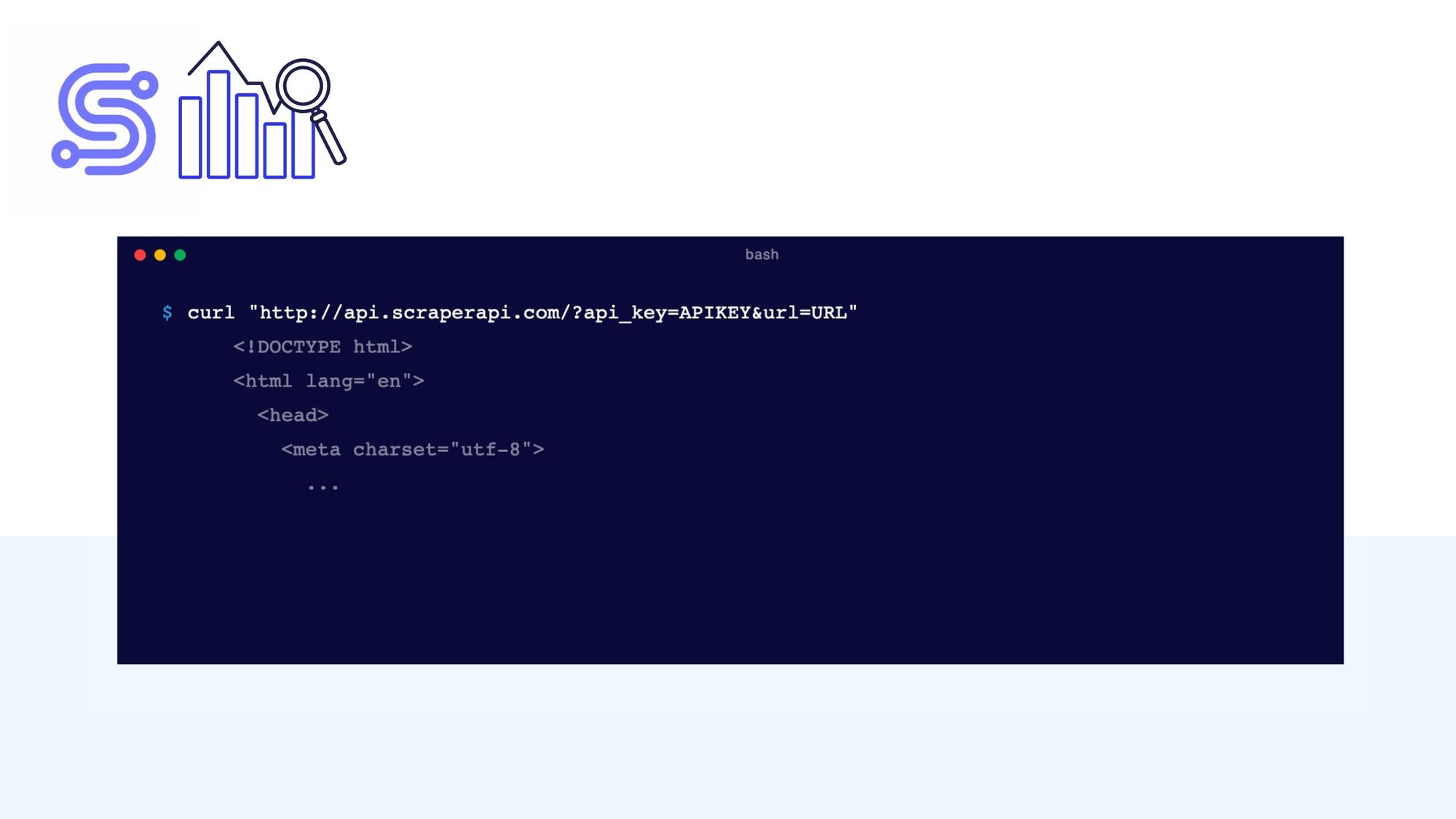
ScraperAPI takes a different approach by focusing on simplicity and scale. You add your API key to any HTTP request, and ScraperAPI handles proxy rotation, CAPTCHA solving, and browser rendering automatically.
We've used ScraperAPI for high-volume projects extracting product data from Amazon and Google Shopping results. The service handled 500,000+ requests per day without significant failures. According to Capterra reviews, users consistently praise the automatic proxy rotation and the fact that premium sites like Amazon and Google don't cost extra credits.
| Feature | Details |
|---|---|
| Pricing | Hobby: $49/mo | Startup: $149/mo | Business: $299/mo | Pro: $999/mo |
| Pros | Affordable entry price, simple API, no extra cost for premium sites, strong documentation |
| Cons | Credit-based system can be confusing, some users report occasional timeout issues |
| Best For | High-volume scraping with minimal setup |
ScraperAPI offers multiple datacenter locations worldwide, HTTPS encryption, and solid error handling. For teams focused on bypassing CAPTCHAs at scale, ScraperAPI's built-in solving is a strong draw.
Is Apify Worth It for Custom Scraping Workflows?

Apify isn't just a scraping API. It's a full cloud platform for building, deploying, and scheduling web scrapers. If you need a pre-built scraper for Google Maps, Booking.com, or Instagram, Apify's marketplace probably has one ready to go.
According to Apify's 2025 State of Web Scraping report, over 65% of organizations now use web scraping to build datasets for AI and machine learning applications. Apify positions itself as the platform for these data-intensive workflows.
| Feature | Details |
|---|---|
| Pricing | Free tier available | Starter: $49/mo | Scale: $499/mo | Business: $999/mo |
| Pros | Pre-built scraper marketplace, open source tools, no-code option, strong community |
| Cons | Steeper learning curve, costs escalate quickly at scale |
| Best For | Developers building custom extraction workflows |
One G2 reviewer noted: "I used it to scrape Booking and Google Maps. It was user-friendly and the result was perfect for what I was looking for." Apify also offers visual workflow editing and RPA automation beyond basic scraping.
What About Budget-Friendly Options Like ScrapingAnt and Scrape.do?
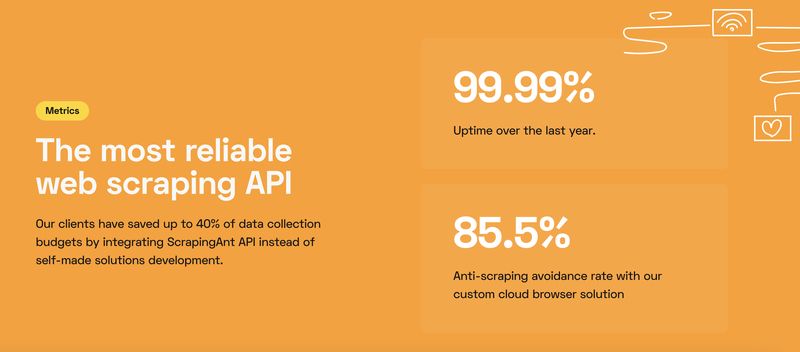
ScrapingAnt and Scrape.do both target teams that need solid scraping without enterprise pricing. ScrapingAnt starts at $29/month and includes headless browser rendering, automatic IP rotation, and proxy support.
Scrape.do achieved a 98.19% average success rate in independent testing with the fastest average response time at 4.7 seconds. According to Proxyway's 2026 comparison, Scrape.do delivers enterprise-level performance at approximately $0.80 per 1,000 requests.
| Feature | ScrapingAnt | Scrape.do |
|---|---|---|
| Starting Price | $29/mo | $29/mo |
| Free Tier | No | 1,000 requests/mo |
| Avg Response Time | Not published | 4.7 seconds |
| Success Rate | Not published | 98.19% |
| JS Rendering | Yes | Yes |
| Best For | Budget scraping | Speed-focused extraction |
A Capterra reviewer described Scrape.do as having "the BEST customer service and product in the industry" and praised the white-glove support. For teams that need ethical web scraping practices at a reasonable price point, either option works well.
Are No-Code Scrapers Like Octoparse and ParseHub Good Enough?
Octoparse and ParseHub serve a different audience: people who need web data but can't write code. Both use visual point-and-click interfaces for building scrapers.
Octoparse handles pagination, AJAX content, and scheduled automation. ParseHub adds Regular Expression support and live data previews. In our experience, these tools work well for one-off data collection projects, but they struggle with sites that aggressively block bots.
| Feature | Octoparse | ParseHub |
|---|---|---|
| Starting Price | $89/mo | Free |
| Free Tier | Yes (limited) | Yes (limited) |
| Coding Required | No | No |
| Cloud Extraction | Yes | Yes |
| Scheduling | Yes | Yes |
| Best For | Business analysts | Beginners |
G2 reviewers describe ParseHub as great for "bulk information collection" but note it can be "redundant" in workflow steps. Octoparse is praised for exporting to spreadsheets without coding, though there's a learning curve. For serious, ongoing scraping projects, API-based tools typically outperform these visual builders in reliability and scale.
Can You Build Your Own Scraper with Beautiful Soup?
Beautiful Soup is a Python library for parsing HTML and XML. It's free, open source, and runs on your own infrastructure. If you're a developer comfortable with Python, Beautiful Soup gives you complete control over the extraction process.
The library works with multiple parsers including lxml, html5lib, and html.parser. We've used Beautiful Soup on projects where we needed to extract structured data from static HTML pages. It handles malformed HTML gracefully and the learning curve is gentle for anyone familiar with Python.
The catch: Beautiful Soup doesn't fetch web pages or render JavaScript. You need separate tools for HTTP requests (like Python's requests library) and browser rendering (like Selenium or Playwright). It also won't help with proxy rotation or anti-bot measures. For production scraping at scale, you'll end up building the infrastructure that paid APIs already provide.
What About Xtract.io and ScrapeStack?

Xtract.io uses machine learning algorithms to detect patterns in HTML and PDF documents automatically. It's trusted by companies like Nissan and Accenture. Pricing starts at $99/month for 5 concurrent requests and 50,000 records, scaling up to $799/month for enterprise needs.
ScrapeStack takes a simpler approach with a REST API backed by over 20 million rotating proxies. It claims an average response time of 1.5 seconds and is fully GDPR-compliant. Plans start at $20/month with a free tier available.
| Feature | Xtract.io | ScrapeStack |
|---|---|---|
| Starting Price | $99/mo | $20/mo |
| Free Tier | 500-record trial | Yes |
| ML-Powered | Yes | No |
| Proxy Pool | Not disclosed | 20M+ proxies |
| GDPR Compliant | Not disclosed | Yes |
| Best For | Enterprise pattern detection | Simple API integration |
How Should You Choose the Right Web Scraping API?
Choosing the right scraping API comes down to matching your requirements against each tool's strengths. After testing these tools across hundreds of thousands of requests, here's what actually matters.
- Set your budget first. Prices range from free to $999+/month. Don't pay for enterprise features you won't use.
- Check JavaScript rendering support. Most modern websites require it. If your target sites use React, Angular, or Vue.js, you need headless browser support.
- Test success rates on your specific targets. A tool that works perfectly on Amazon might fail on a smaller site with aggressive anti-bot measures. Most services offer free trials.
- Evaluate proxy coverage. Residential proxies work better than datacenter proxies for sites that detect bot traffic. Check whether the service charges extra for premium proxy types.
- Consider your technical skills. No-code tools like Octoparse and ParseHub suit non-developers. API-based tools like ScraperAPI and ScrapingAPI.ai suit developers who want full control.
- Review the data output formats. Make sure the API returns data in formats you can work with: JSON, CSV, or structured HTML.
- Check rate limits and concurrency. If you need to scrape millions of pages, verify the service can handle your volume without throttling.
For most teams running production scraping workflows, we'd recommend starting with ScrapingAPI.ai or ScraperAPI for API-based scraping, or AI-powered scraping tools if you're building LLM datasets. If cost is the primary concern, Scrape.do and ScrapingAnt deliver strong value at lower price points.
What Are the Key Differences Between Web Scraping and APIs?
Web scraping extracts data by parsing HTML from web pages. APIs provide structured data directly through request-response protocols. They solve the same problem differently.
Web scraping requires handling page rendering, dealing with anti-bot measures, and parsing unstructured HTML. APIs give you clean, structured data but only for the endpoints the provider exposes. You can't API your way to data that isn't available through an official API.
Web scraping APIs combine both approaches. They provide a simple API interface while handling the scraping infrastructure behind the scenes. You get the flexibility of web scraping with the simplicity of an API call. That's why tools like ScrapingAPI.ai and ScraperAPI have become popular: they eliminate the infrastructure headache while giving you access to virtually any public web data.
According to Mordor Intelligence, the web scraping market will reach $2 billion by 2030. According to PromptCloud's 2025 report, the Asia-Pacific region leads growth at 18.7% CAGR. The market is expanding because the most scraped websites keep adding anti-bot defenses, pushing more teams toward managed API solutions.
Frequently Asked Questions
What are web scraping API tools?
Web scraping API tools extract data from websites through HTTP endpoints. You send a URL, and the service returns structured data after handling proxies, rendering, and anti-bot bypassing on your behalf.
Are web scraping APIs legal?
Web scraping of publicly available data is generally legal in the United States following the hiQ Labs v. LinkedIn ruling. However, each country has different regulations, and scraping behind login walls or violating terms of service can create legal risk. Read our guide on ethical web scraping practices and review the legal battles that shaped scraping law before starting a project.
Which web scraping API has the best success rate?
In independent testing, Scrape.do achieved 98.19% success rates with 4.7-second average response times. ScrapingAPI.ai and ScraperAPI both report success rates above 95% on most target sites. Success rates vary significantly depending on the target website's anti-bot measures.
Can I use web scraping APIs for LLM training data?
Yes. Over 65% of organizations now use web scraping to build training datasets for machine learning and LLMs. Tools like ScrapingAPI.ai and Apify are particularly well-suited for this use case. See our guide on how to scrape websites for LLM training.
What's the cheapest web scraping API?
Beautiful Soup is free but requires you to build your own infrastructure. Among managed services, Scrape.do and ScrapeStack both offer free tiers. ScrapingAnt and Scrape.do start at $29/month for paid plans. At scale, Scrapingdog claims the lowest per-request cost at $0.063 per 1,000 API calls.


